

Every basketball parent has wondered at some point whether their child should spend more time in the gym or on the game court. Some families sign up for every league and tournament they can find. Others stick to workouts and drills. The truth is more interesting than either camp admits. Youth basketball training and game play do different jobs, and the fastest-improving players use both on purpose. At Rossetti Basketball, this balance is the foundation of how young athletes develop.
The Question Behind the Question
When parents ask “training or games?”, they usually mean “where is my child’s time and money better spent?” That is a fair worry. A season has limited weekends, and kids have school, friends, and rest to protect.
The better question is: what is my child’s biggest gap right now? A player who can’t dribble with the left hand needs a different plan from a player who looks sharp in drills but freezes in a real game. Once you know the gap, the choice gets much easier.
What Youth Basketball Training Does Best
Think of training as the lab and games as the exam. In the lab, a player can fail safely, repeat a move fifty times, and get instant feedback from a coach.
- Fundamentals get built. Footwork, ball handling, shooting form, and finishing around the rim all need repetition that a game rarely provides. In a game, a player might touch the ball for only a few minutes.
- Coaching is more focused. In training, a coach can stop, correct, and let the player try again right away. This makes mistakes much easier to fix before they become habits.
- Confidence grows in private. Players can try new moves without fear of a turnover or a teammate’s reaction.
- Weaknesses get attention. Games reward what a player already does well. Training lets them work on what they avoid.
What Games Teach That a Gym Drill Can’t
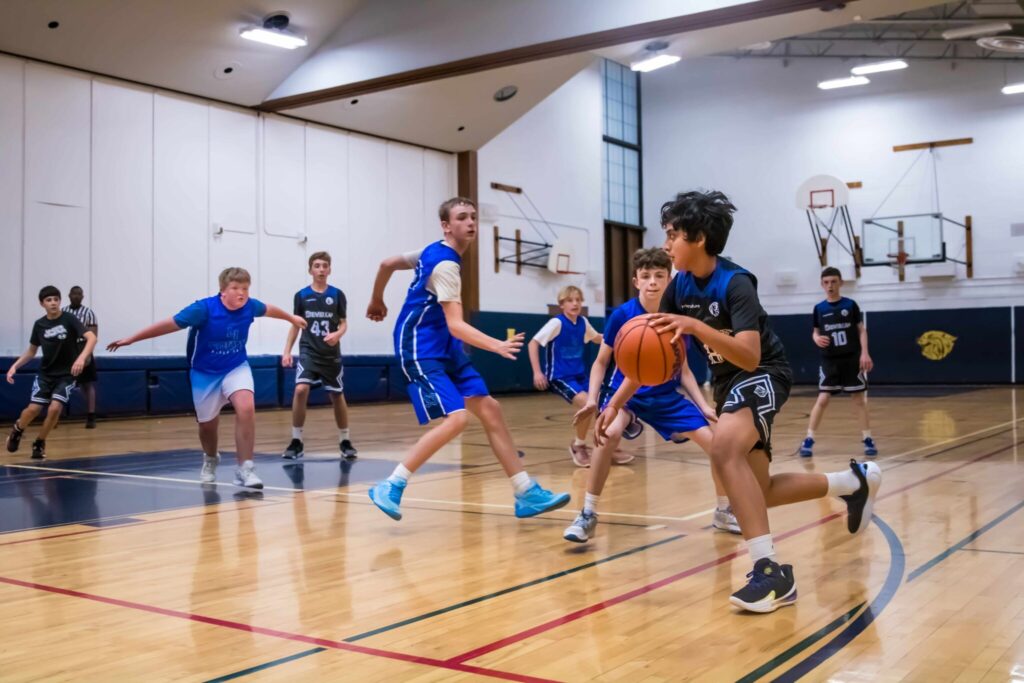
Games bring speed, pressure, and decisions. Nobody calls out the play in a real game, and the defender won’t wait politely.
- Decision-making under pressure. Reading a defender, spotting an open teammate, and choosing between a drive and a pass only happen in live action.
- Teamwork and communication. Calling screens, helping on defense, and trusting teammates are learned through shared minutes, not solo drills.
- Handling mistakes. A missed shot or a bad pass teaches resilience when the game keeps moving.
- Learning to compete. Effort, composure, and mental toughness show up when the score is close.
The Hidden Problem With Games-Only Development
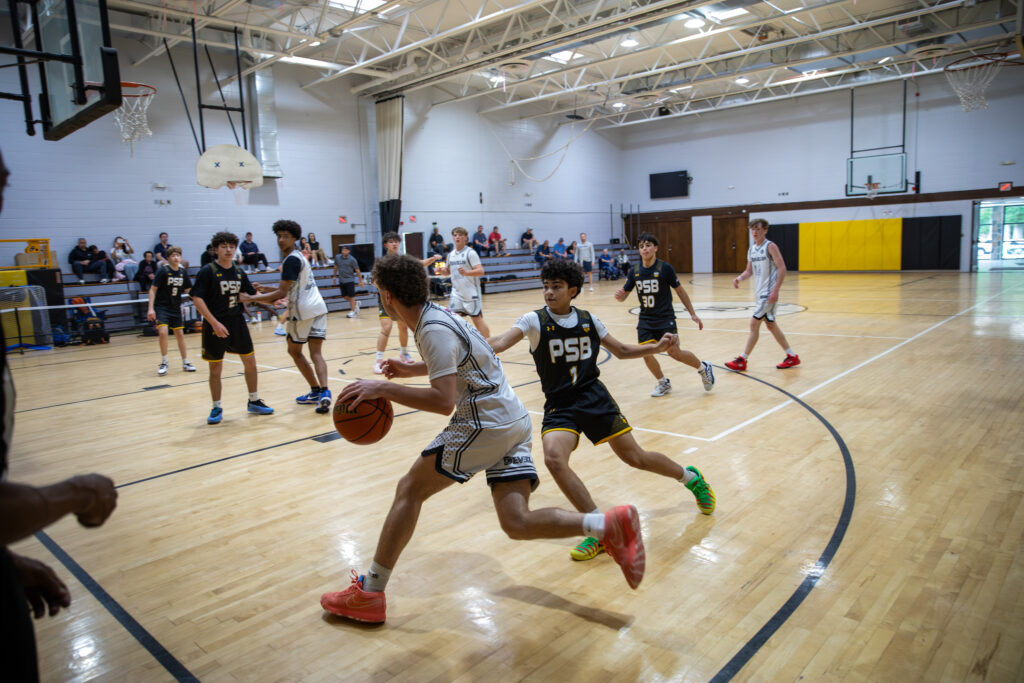
Many talented kids stall because they play constantly but never practice with purpose. They rely on the one or two moves that already work, such as always driving right or always shooting the same way. Because games reward results, bad habits can stay hidden when they happen to succeed against weaker opponents.
Fatigue is another issue. Back-to-back tournament weekends with no skill work in between can leave a player tired, sloppy, and no better than before. More games do not automatically mean more improvement.
Why Youth Basketball Training Alone Isn’t Enough
The opposite problem is just as common. Some players look polished in a quiet gym but struggle once the pace picks up. They can hit every cone drill, then rush a layup when a defender closes in. Skills that are never tested in live competition stay fragile.
That is why quality youth basketball training should always point toward game situations. Good sessions include contact, time limits, and decision-making, not just isolated reps. The goal is not a beautiful workout. The goal is a better player on game day.
Finding the Right Balance in Youth Basketball Training
There is no single perfect ratio, but a useful guideline is that younger and less experienced players should lean toward more practice time. Older, more advanced players can gradually add more competition. Here is a simple way to think about it:
- Beginners (early grades): mostly skill work, with fun, low-pressure games.
- Developing players: an even mix of training and league play.
- Advanced players: regular games and tournaments, with targeted training to fix specific weaknesses.
Watch your child after a game and after a workout. If they come off the court excited and curious, you are probably close to the right balance. If they seem burned out, scale back.
Plan Your Year Season by Season
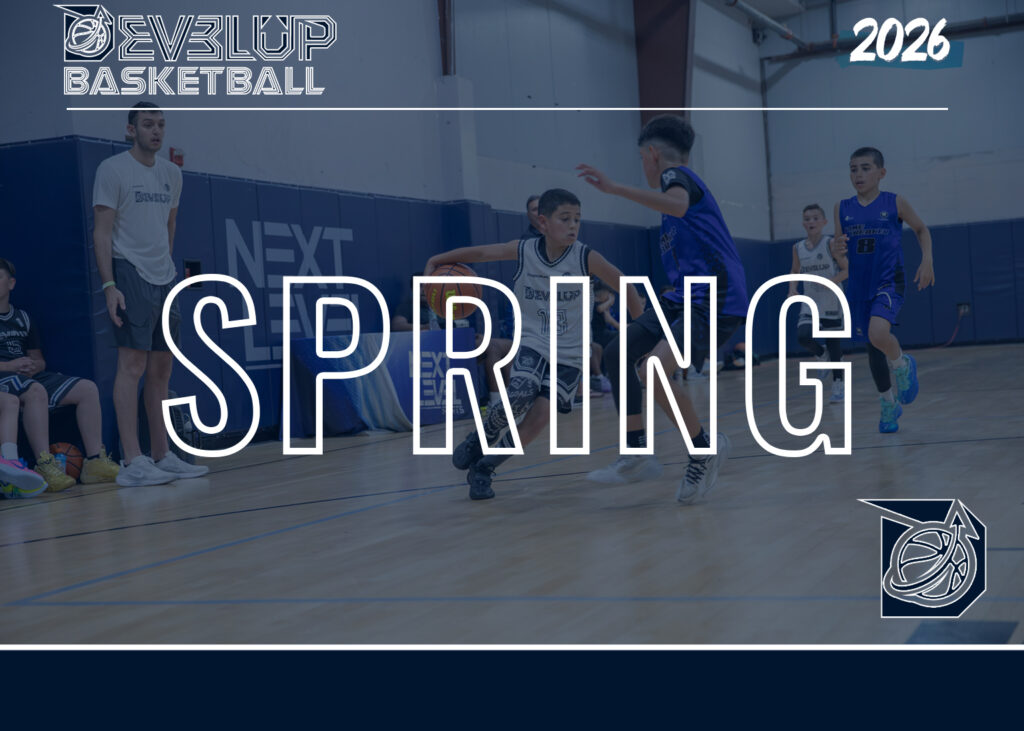
Basketball is a year-round sport, and a smart schedule changes with the calendar. DEVELUP organizes its Season offerings so players can build skills and compete throughout the year.
The Fall is a natural time to reset fundamentals and settle into a team. The Winter months bring game-heavy competition, and the winter youth basketball program gives families a structured option during the coldest part of the year. The Spring is ideal for applying what was learned in league play, while the Summer offers time to work on weaknesses and try new skills without school pressure.
How to Choose a Program That Does Both
Look for a program that connects practice to games rather than treating them as separate worlds. Ask whether coaches run skill-focused practices, whether players are grouped by grade and ability, and whether the schedule is shared in advance. You can see how one Long Island organization approaches this in its guide to the top youth basketball teams. Strong programs also keep a positive culture, where effort and coachability matter as much as talent.
FAQs
Q. What is the best age to start youth basketball training?
Many children can begin basic skill work in the early elementary grades, as long as sessions stay fun and age-appropriate. Younger players benefit most from ball handling, coordination, and basic shooting form.
Q. Why is training important if my child already plays in a league?
League games rarely give enough repetition to fix technique. Training adds the focused reps and coaching feedback that games can’t.
Q. How often should a young player train each week?
It depends on age, schedule, and energy. Many families start with one or two sessions a week and add more as the child’s interest and stamina grow. Rest days matter too.
Q. When should my child move from training to more competitive games?
When the basics feel comfortable and your child shows they want more challenge. Signs include handling the ball under light pressure and asking when the next game is.
Q. Which is better for confidence: games or training?
Both help in different ways. Training builds quiet confidence through skill, while games build confidence through real competition. A mix works best.
Q. Where can my child get both training and team experience?
Programs that combine practices, league play, and tournaments are ideal. DEVELUP, based in Holbrook, NY, offers teams for boys and girls in Grades 3-12 across Suffolk County.
The Bottom Line
Games and training are not rivals. Training builds the tools, and games teach players how to use them. The young athletes who improve fastest are those who get both, with enough rest to enjoy the process. Start by spotting your child’s biggest gap, then build a schedule that fills it.